All-new Proton Saga comes with updated looks, new engine and gearbox combination
Proton unveiled the all-new Proton Saga at a media preview that included a test drive. These are the details of the new vehicle as well as our first drive impressions.
The Proton Saga was the first vehicle ever launched by Proton in 1985. Since then over 2 million vehicles with that nameplate has sold all over the world and the Saga is one of the best-selling name plates in Malaysia. The A-segment saloon has also won several awards in Malaysia over the years. Most recently, the third-generation Proton Saga, which ceased production on 30 September 2025, won the following accolades:
- Rising Star Award Car – Asean NCAP Grand Prix Award 2016
- Value-For-Money Car – Malaysia Car of the Year 2016
- Compact Sedan of the Year – DSF.my Allianz Vehicle of the Year (VOTY) 2017
- Best 3 City Cars of Malaysia – Aurizn Awards 2018 ‘Cars of Malaysia’
- Budget Car (Bronze Winner) – Carlist.my People’s Choice Awards 2018
- Best Compact Sedan (below RM70K) – CarSifu Editors’ Choice Awards 2019
What’s New?
Reinforced Chassis
Although the fourth-generation Saga retains the familiar body lines of the second and third generation Sagas, the car is not a facelift. Its retain the same dimensions because as before, it is built on Proton’s Advanced Modular Architecture platform. However, the structure now has hot-press-formed (HPF) steel B-pillars and floor cross member, as well as an advanced-high-strength steel roof cross member and high-strength steel door bars giving the all-new Saga better rigidity and crash protection. There is also a new engine, 337 new parts, 391,000 man hours of development and testing as well as 412,000km of road testing.
The all-new Saga comes with 15 “unique-in-class” and 15 “better than direct competitor” (Perodua Bezza) features as well as 50-plus competitive features which range from the new engine and reinforced chassis to the seemingly mundane like three USB ports and seven cupholders. Altogether, there are 35 new features collectively worth around RM12,000. It is a re-engineered new car which is now also one of the safest and most generously specced cars in its category. The Saga will be available in three spec levels, Standard, Executive and the top-of-the-range Premium.
New Engine
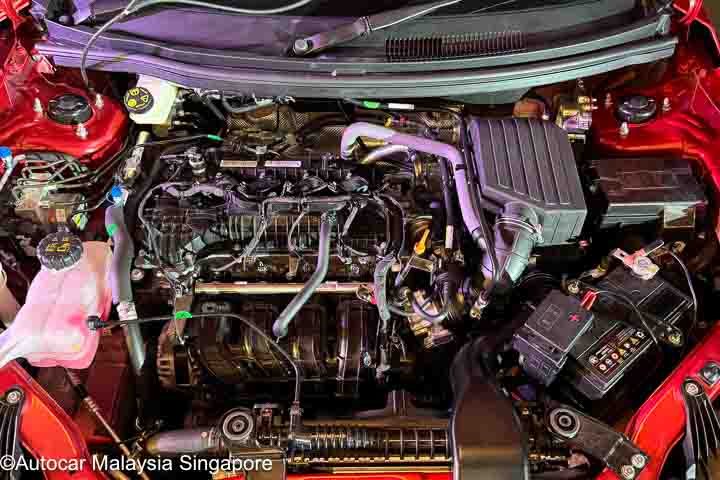
The new i-GT (intelligent green technology) 1.5-litre engine is built by Proton at Tanjung Malim. The new four-cylinder is also in the X50 however, the Saga gets a naturally-aspirated version with a maximum power of 120PS or 88kW and maximum torque of 150Nm. The engine has undergone over 50,000 hours of dyno tests as well as 9million-plus kilomentres of global road tests.
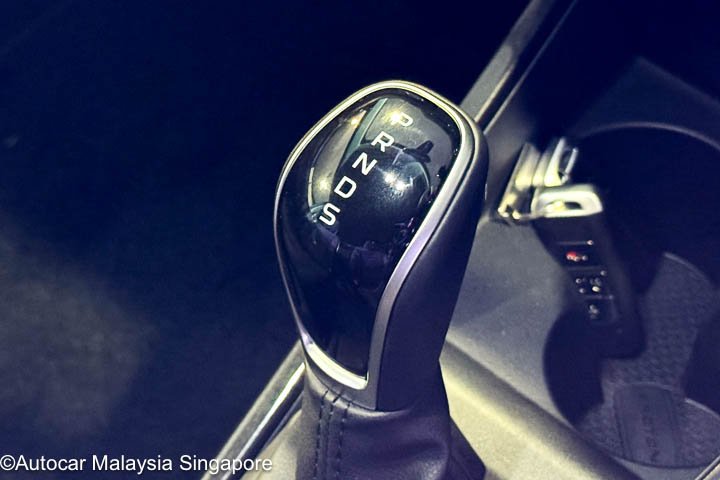
There is no manual option at the moment. In the Standard and Executive the Saga is paired with a four-speed automatic gearbox. In the Premium the transmission is CVT. The Punch Powertrain CVT is back although at the preview, Proton would not confirm if this was the same Punch CVT used in previous models. The reason for the reintroduction of the CVT is the lower fuel consumption vs the four-speed auto. Compared to the previous 1.3-litre engine, the Premium fuel consumption is now 4.9L/100km, a 14.04% improvement while the Standard and Executive at 5.1L/100km has a 10.53% improvement on the old engine.
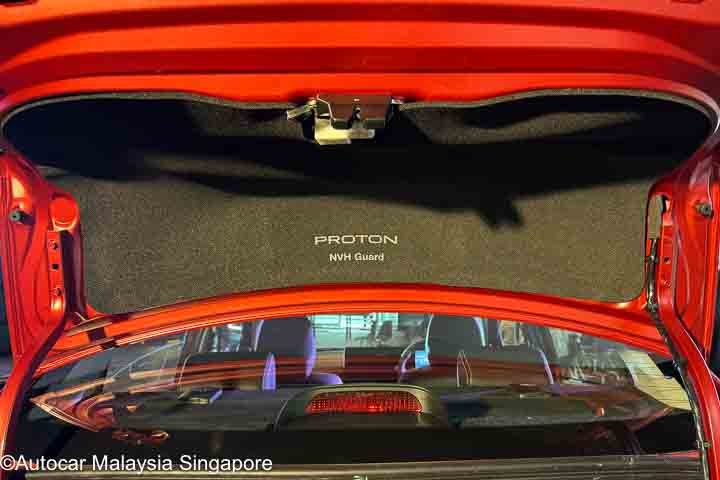
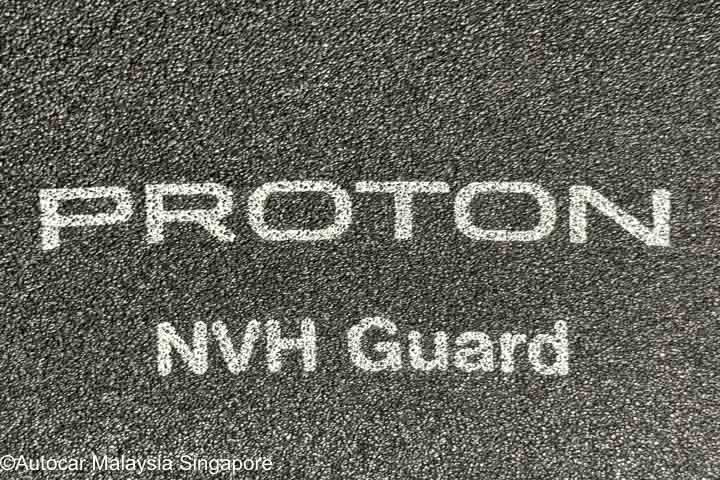
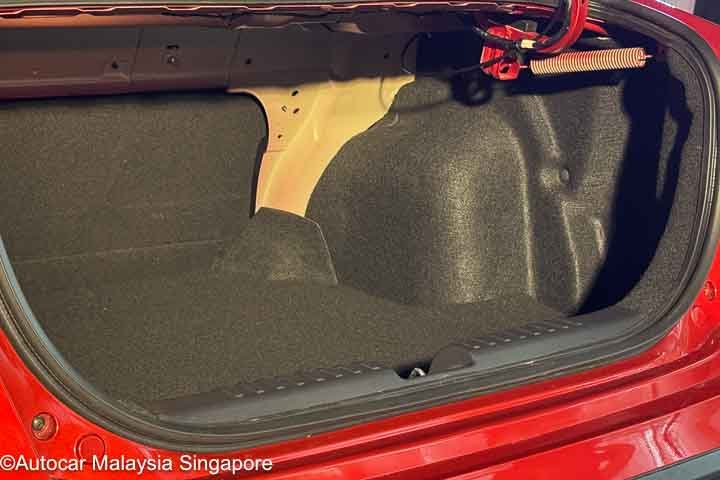
The lower fuel consumption is also due to the engine operating on an Atkinson Cycle as well as dual variable valve timing and an electric water pump which maintains engine temperature more effectively. The NVH (noise, vibration, harshness) is also 25.24% quieter with the fitment of a dual mass flywheel and toothed timing chain. The timing chain will also reduce maintenance costs compared to the timing belt in previous Saga models.
Improved Safety Features
Also new are the safety features, probably the most important of all the new features. The all-new Saga, Premium only though, now has Level 1 Advanced Driver Assistance System features: Collision Mitigation Support Front (CMSF) with Autonomous Emergency Braking (AEB) and Forward Collision Warning (FCW); Front Departure Alert (FDA), Intelligent High Beam Control (IHBC) and Lane Departure Warning (LDW) thanks to the new monocular camera system which has a range of up to 150metres.
CMSF is unique-in-class and not available in the Perodua Bezza. The all-new Proton Saga is the first A-segment car to earn ASEAN NCAP recognition for passing the AEB Motorcyclist test.
At the rear, the new Rear Side Radar System (RSRS) with 120m range covers Door Opening Warning (DOW), Rear Collision Warning (RCW), Lane Change Assist (LCA) and Rear Cross Traffic Alert (RCTA). DOW and RCW are both unique-in-class features. The rear collision warning detects potential rear-end collisions and automatically activates hazard lights and sounds an alert to warn the driver of the incoming car.
The Premium now has six air bags with the addition of four side curtain airbags. The Standard and Executive have two airbags.
Redesigned Exterior
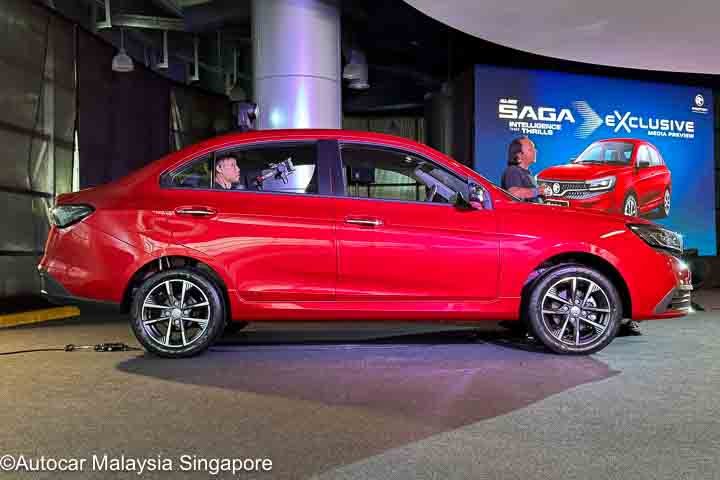
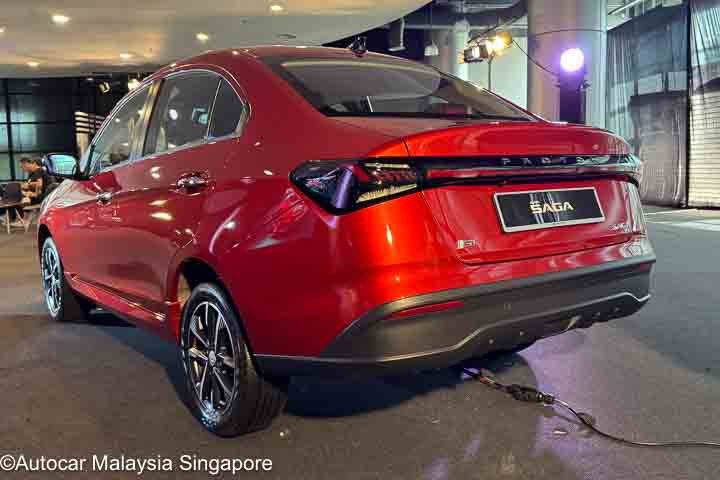
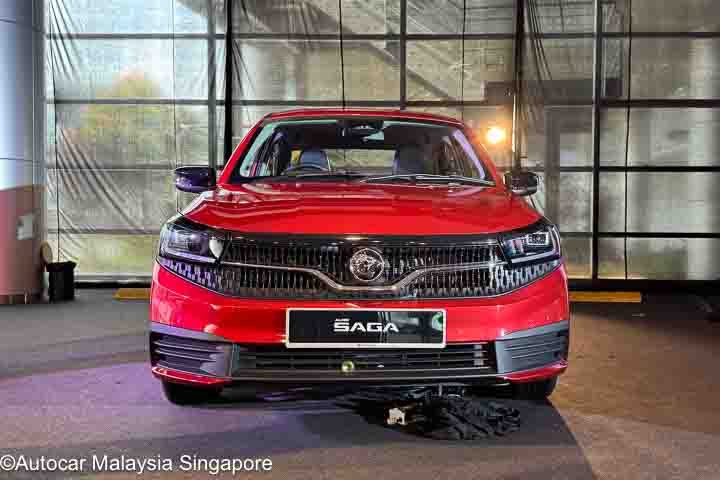
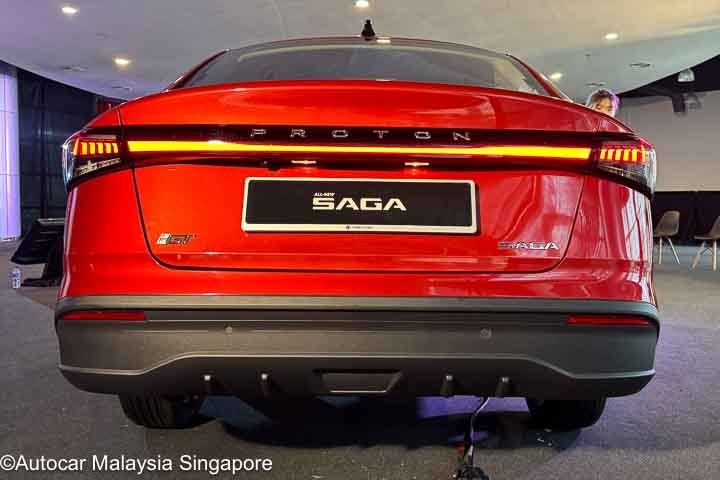
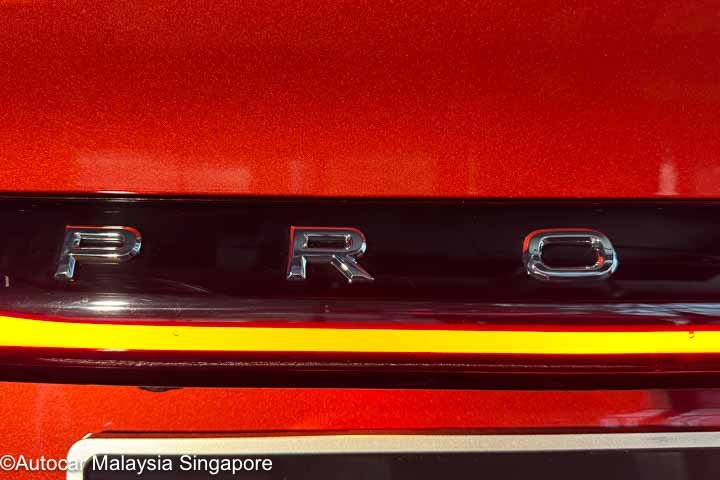
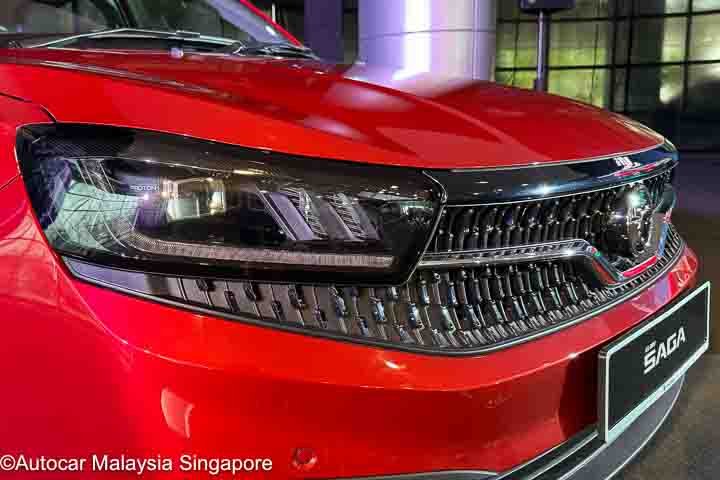
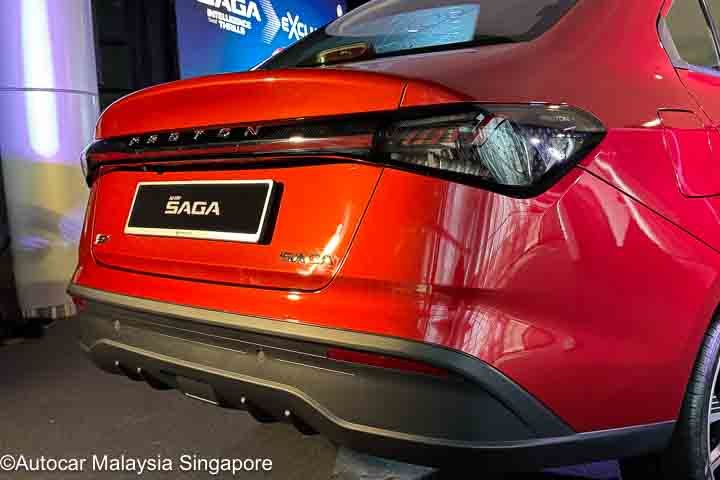
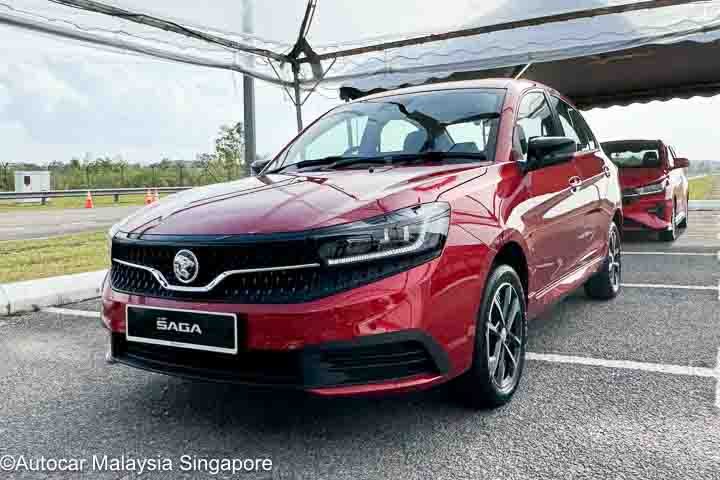
The body is the same but the styling is more up to date. The two most immediately noticeable design changes are the new wider front grille featuring the Sulaman Songket grille pattern and sleek new 3D LED taillights. The LED headlights are a new design and integrated into the grille. The new headlights have integrated daytime running lights with curving chrome line across the grille linking the left and right DRLs. Exclusive to Premium, the new design taillights have an LED lightbar connecting the left and right light casing giving the Saga and Proton S70 saloon a familial rear light signature. The Standard and Executive don’t have the connecting lightbar.
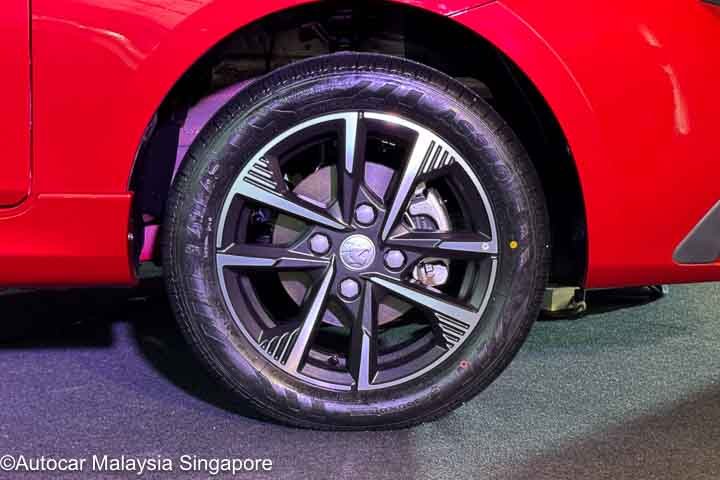
Other less obvious external new equipment are the new design alloy rims and new rear bumper with integrated reflectors.
All-new interior
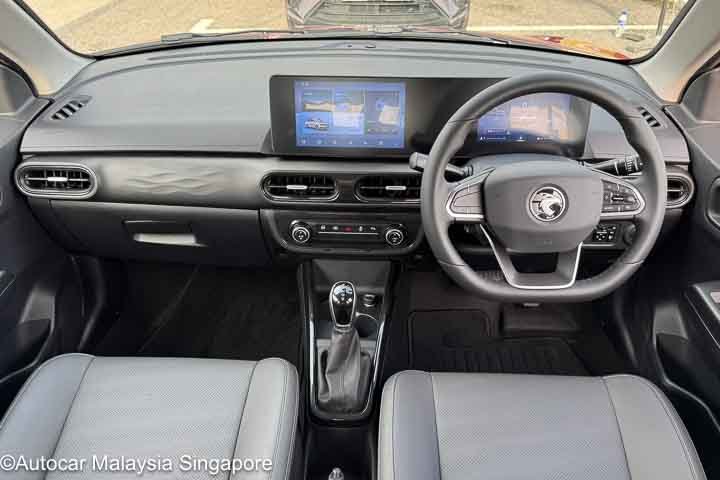
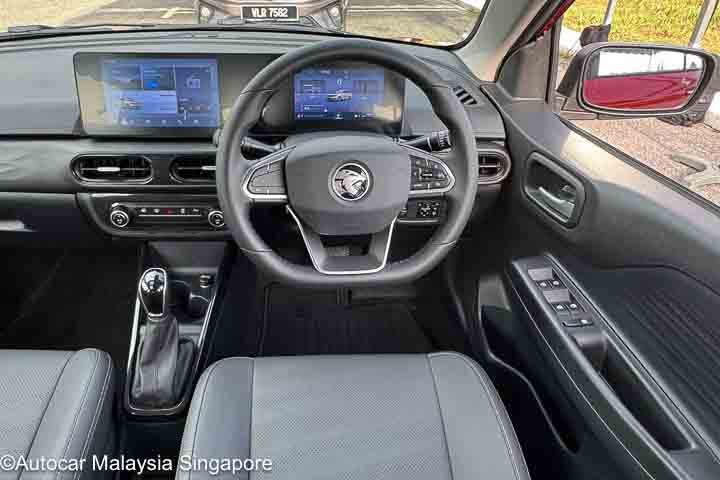
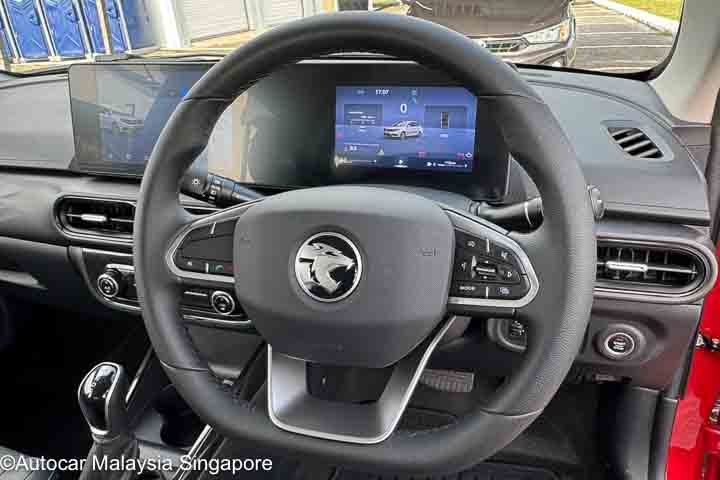
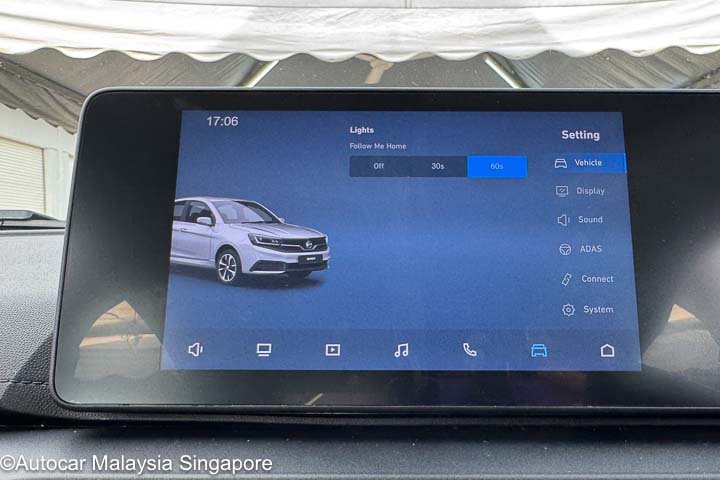
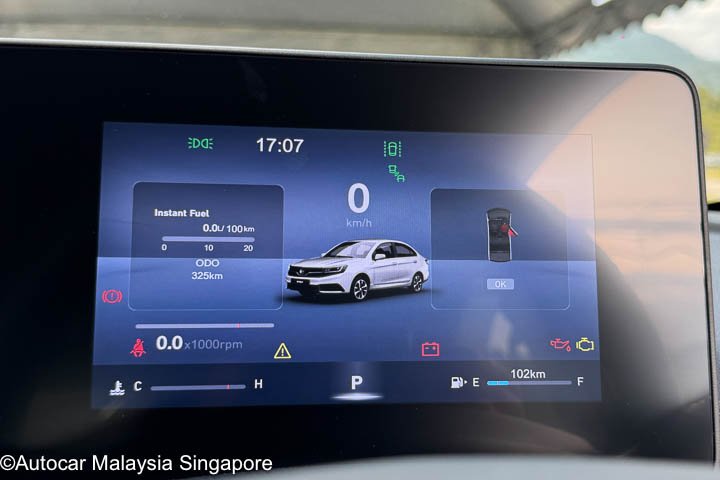
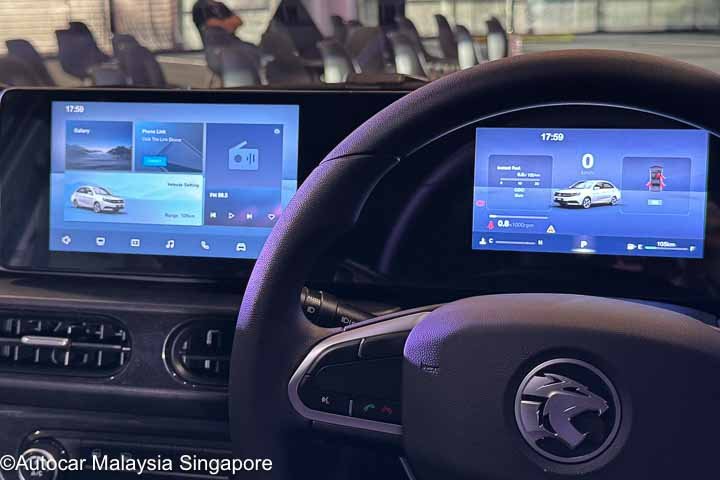
The interior has had a considerable redesign making it more ergonomic and stylish than before. Most prominent is the all-new dashboard. There is now a single 16-inch screen with two displays. One is the nine-inch touchscreen infotainment monitor, the other, a seven-inch digital meter display. The single screen-dual display is the first of its kind in an A-segment car. There is now Wireless Apple CarPlay and Android Auto.
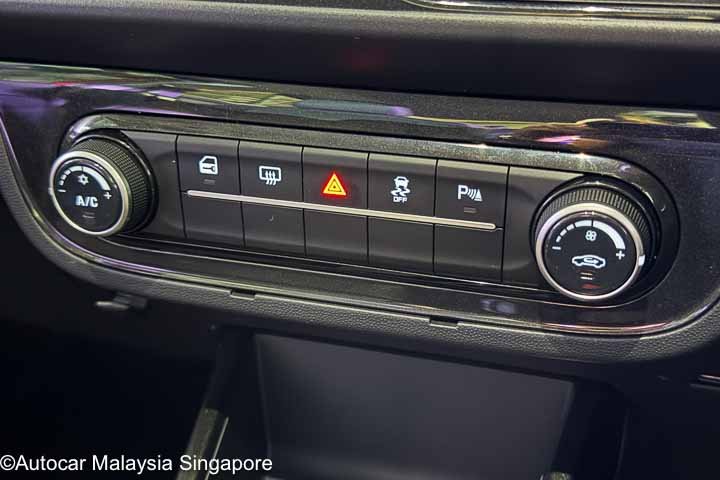
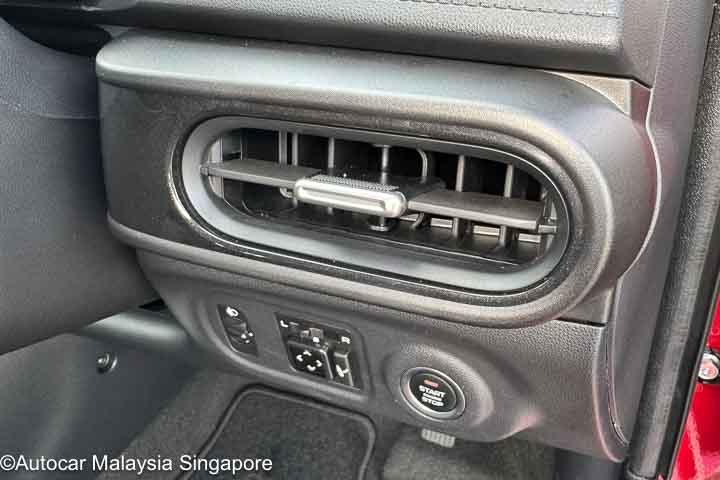
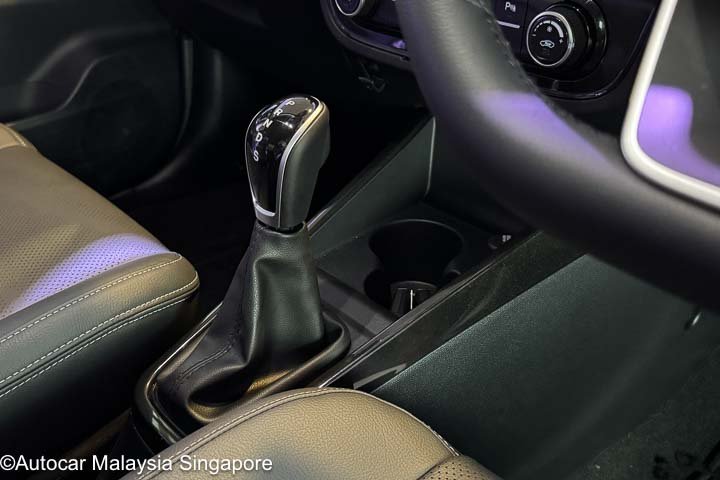
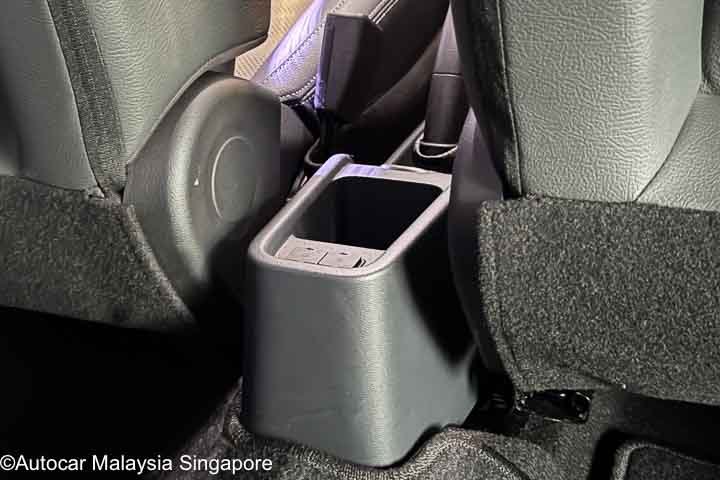
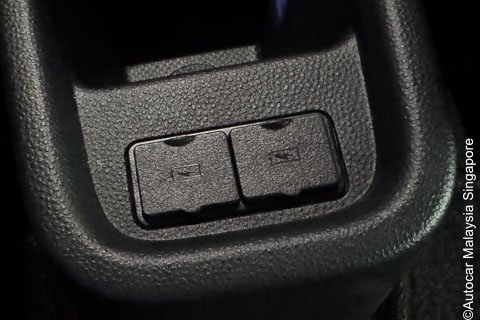
There are new capsule-shaped air vents, which have been likened to a congkak board. Unlike in the previous generation Saga, the vents are at the same level to each other along the dashboard. Two vents are at either end of the dashboard and two in the middle. Under the centre air vents are the climate control knobs. These are large and easy to locate when adjusting fan speed or temperature. Underneath which, at the centre console, in front of the gear stick, are two of the seven cupholders. There are two more at the front door pockets and two at each rear door. The seventh is between the two front seats, behind the manual hand brake. The cupholder can also double up as a phone charging point. There are two Type-A USB charging ports located next to it.
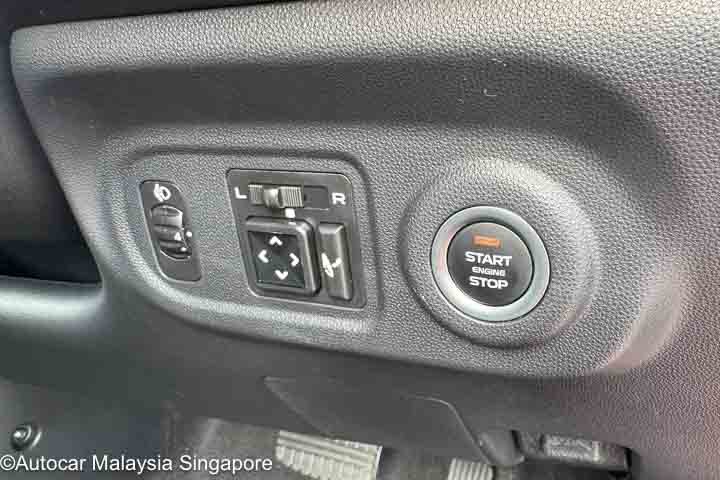
The steering wheel is now the same style as that in the 2025 Proton X70 although with less functions. Now there is also steering height adjustment.
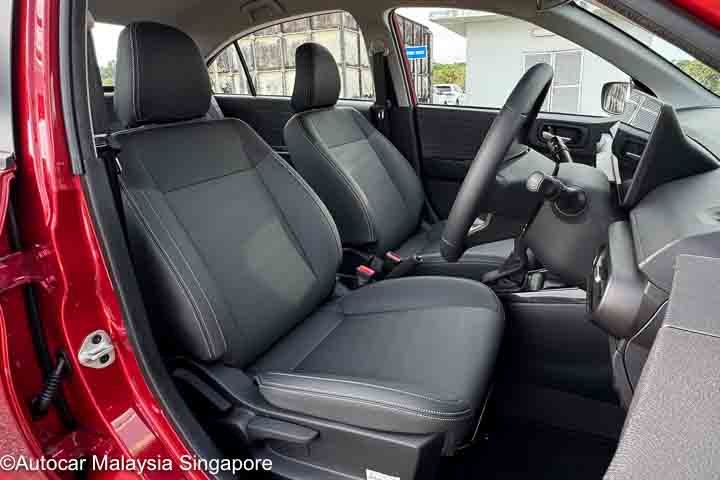
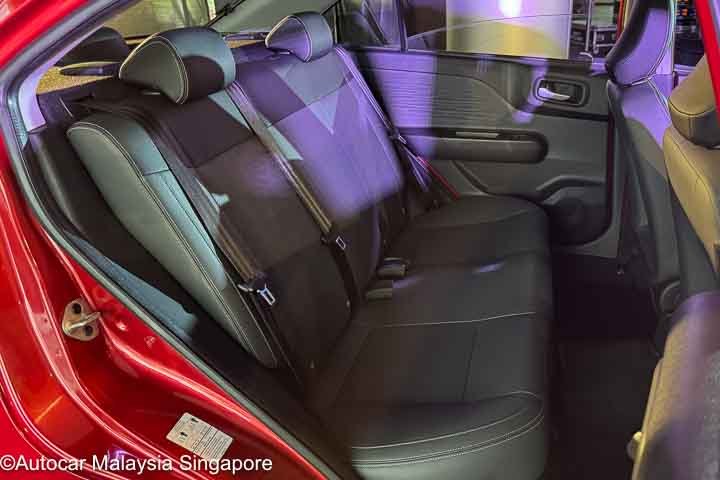
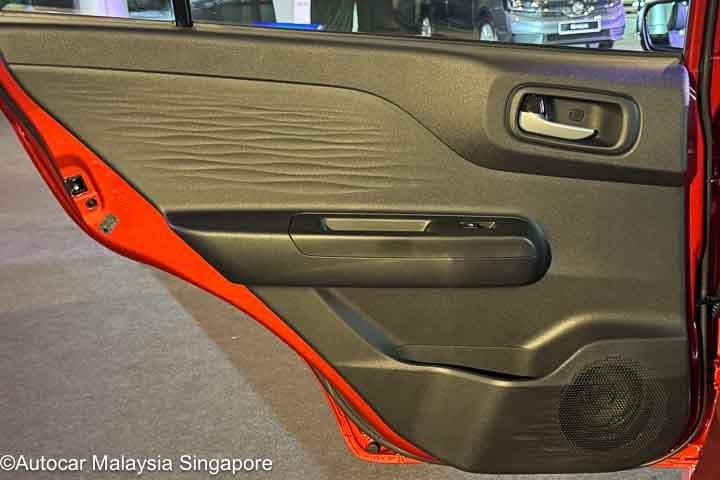
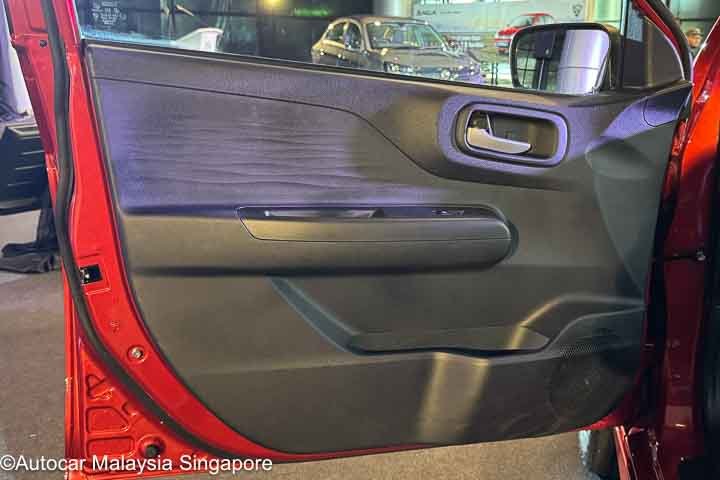
On the dashboard between the air vents for the front passenger, there is a tactile wave pattern. This wave pattern is also on the door cards. In the Executive variant, the pattern is also on the fabric upholstery. The Premium has two-tone leatherette seats, no pattern. The Saga seats are are bigger than the seats in rival Perodua Bezza. Wider by 1cm with 4cm more thigh support for the front seats. Meanwhile in the rear, the Saga has 6cm wider seats with 1cm more thigh support.
New Exterior Colours Colours
There will be two new colours for the Saga at launch – Deep Marine Blue and Space Grey. Ruby Red, Snow White and Armour Silver will also be available. There are new design alloy wheels for Premium and Executive variants. Premium will have 15-inch two-tone Directional Arrow design alloys. The Executive will have the same 15-inch Directional Arrow design but in a single tone finish. The Standard will get 14-inch rims in a single tone finish in a different design.
What is it like?
We got to drive the all-new Proton Saga at Proton’s test track in Tanjung Malim in a series of exercises. These were to demonstrate safety features, zero to 100km/h acceleration, and handling in a series of figure of eight manoeuvres and around some bendy sections of the track. We were also given a demonstration of the Autonomous Emergency Brake and a chance to experience the Rear Side Radar System with a car coming up fast behind us as we drove the Saga along the track. Visual and audible warnings were set-off by the rapid approach giving ample time to respond to the potential collision. All cars were still intact at the end of the day.
In the acceleration test against the Perodua Bezza, the CVT Saga left the Bezza trailing. A combination of more power and the advantage of a CVT which always moves off from standstill faster than an automatic gearbox. However, the screeching sounds from the Saga’s CVT should be a salutary lesson that there is more to enjoy in driving than doing zero to 100km/h in the shortest time.
During the handling exercises, putting the all-new Saga through manoeuvres that it wouldn’t undergo under everyday driving conditions, the Saga’s family-oriented suspension was pushed hard over tight turns. While there was visible and perceptible weight shift with every sharp and deliberately jolting turn of the steering wheel, the Saga never felt unstable nor out of control. It retained its composure, thanks to the electronic intervention of the electronic stability control and traction control.
Conclusion
The all-new Proton Saga has deep tracks to follow but it is also leaving a solid impression of its own. Safety upgrades, styling updates and NVH improvements, here’s to the next 45 years of the Saga nameplate.
Pros: ADAS Level 1 is available
Styling updates especially to the interior
low fuel consumption
Cons: the noisy CVT
stiff gear lever
Looking for a new car? Whatsapp YS Khong at +60 16-335 0609. Let him know, Lisa sent you! Thank you, it helps support both our channels.
All-new Proton Saga Premium